
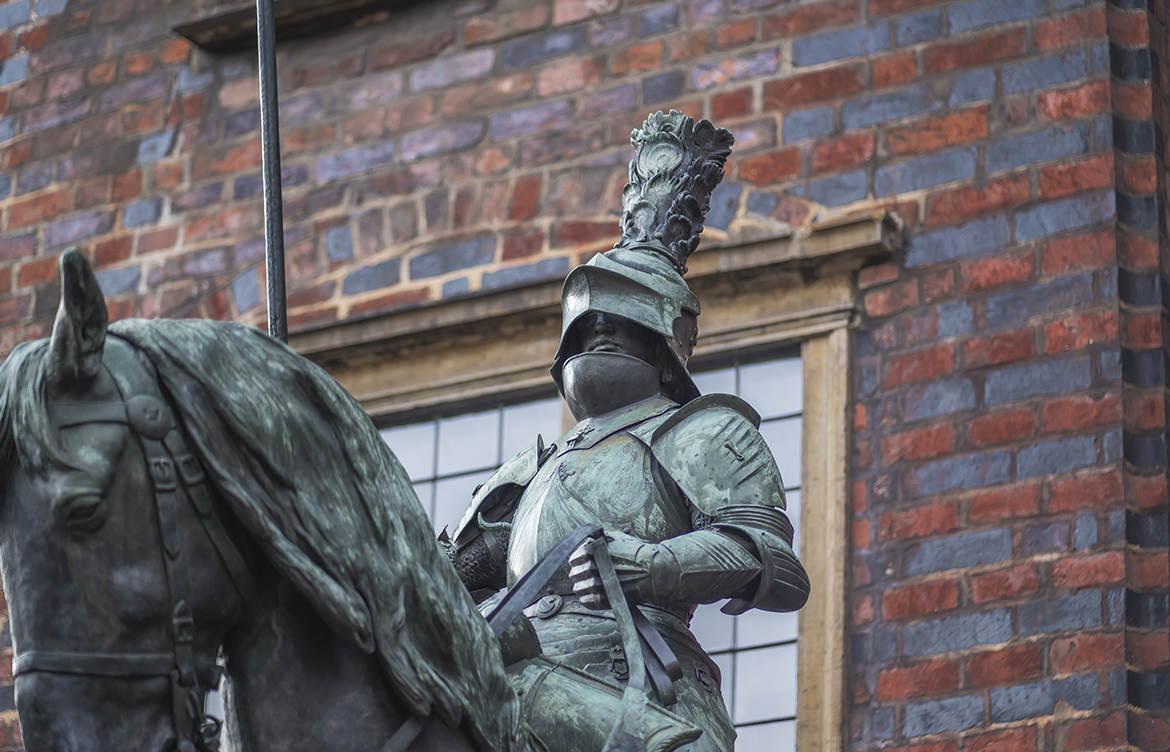
Conquistador of St. Augustine
the oldest continuously inhabited European settlement in the continental United States. The story of the conqueror of St. Augustine begins with Spanish exploration, with royal ambition and military strategy. The settlement, established by Pedro Menéndez de Avilés, was founded on September 8, 1565, and is a city that still exists today. The events surrounding its founding changed the course of Florida’s history for centuries.
Who Was the Conquistador of St. Augustine
The conquistador of St. Augustine was Pedro Menéndez de Avilés, a Spanish admiral and explorer born in Asturias, Spain, in 1519. He served the Spanish Crown for many years before receiving one of the most important missions in the New World.
King Philip II appointed Menéndez Captain General in 1560. His experience in protecting treasure fleets made him one of the most trusted naval commanders of Spain. A few years later, the Crown gave him permission to organize an expedition to Florida. His goals were several. He had to establish a permanent Spanish settlement, strengthen Spain’s claims in the region, and remove the French Huguenot colony that threatened Spanish control of the Atlantic coast.
Spanish interest in Florida had started much earlier. Explorer Juan Ponce de León reached the peninsula in 1513 and claimed the land for Spain. However, no lasting European settlement appeared for more than fifty years. During that period, several expeditions failed because of weather, conflicts with native peoples, disease, and supply problems.
Why Spain Needed a Settlement
Florida occupied an important place on the sea routes between the Caribbean and Spain. Treasure fleets carrying silver and gold often sailed near the Atlantic coast.
Spain wanted to achieve several objectives:
- Protect shipping routes between America and Europe.
- Prevent French expansion in Florida.
- Create a permanent military base.
- Expand Catholic missions.
- Strengthen royal authority in the region.
These reasons explain why Menéndez received both military and political authority during his expedition.
Founding St. Augustine in 1565
The expedition sailed from Spain during the summer of 1565. On August 28, the crew first saw the Florida coast. That day was the feast of Saint Augustine of Hippo, which later inspired the settlement’s name.
After exploring the coastline and encountering French ships near the St. Johns River, Menéndez decided to move south. On September 8, 1565, he officially claimed the land for King Philip II and founded San Agustín, today known as St. Augustine. A Catholic Mass celebrated by Father Francisco López de Mendoza Grajales marked the formal beginning of the settlement. Historians often describe this ceremony as the first documented Thanksgiving Mass held in what later became the continental United States.
The first settlers established their homes near the Timucua village of Seloy. Instead of building an entirely new town from nothing, they adapted the existing location. The Timucua chief allowed the Spanish to use the large community building while they created defensive works around the settlement. A moat and wooden fortifications protected the first colony during its earliest months.
Conflict With the French
The foundation of St. Augustine was closely connected with the rivalry between Spain and France.
French settlers had already built Fort Caroline about 30 miles north near the present Jacksonville area. Spain considered this colony illegal because the land belonged to the Spanish Crown according to its claims.
Soon after founding St. Augustine, Menéndez marched north with his soldiers. Spanish forces captured Fort Caroline with little resistance because many French soldiers were absent. Most defenders were killed, while women and children were spared. The captured fort received a new Spanish name – San Mateo.
A second battle followed after French survivors reached the coast south of St. Augustine. Many prisoners surrendered, but Menéndez ordered the execution of most Protestant soldiers. The place later became known as Matanzas, a Spanish word meaning “slaughters.” These events remain among the most controversial episodes in the history of Spanish Florida.
Growth of the Spanish Settlement
Life was not easy in the new colony. The first settlers had to cope with an unknown climate, seasonal storms, limited food, and difficult relations with various native groups. Fishing and trade became important for daily survival. Agriculture developed slowly. These problems notwithstanding, St. Augustine remained continuously occupied each year after its establishment in 1565, the oldest such European settlement in the continental United States.
During the following decades, Spain strengthened the town because attacks from rival European powers became frequent. English privateer Sir Francis Drake attacked and burned much of St. Augustine in 1586. Other raids followed during the seventeenth century, proving that stronger defenses were necessary.
One of the greatest defensive projects became the construction of Castillo de San Marcos. Building work started in 1672 and continued until 1695. Unlike earlier wooden forts, this massive fortress used coquina stone, a local material made from compressed shells. The walls absorbed cannon fire much better than ordinary stone, helping the fortress survive several sieges. Even today Castillo de San Marcos remains one of the best–preserved Spanish forts in North America.
Political Changes Through the Centuries
Although Pedro Menéndez founded St. Augustine under Spanish rule, control of Florida changed several times.
After the Seven Years’ War, Spain transferred Florida to Great Britain in 1763 under the Treaty of Paris. St. Augustine became the capital of British East Florida. Twenty years later, the Treaty of Paris in 1783 returned Florida to Spain after the American Revolutionary War.
The final political change happened through the Adams–Onís Treaty. Spain ceded Florida to the United States in 1819, while formal transfer took place in 1821. St. Augustine became one of the territorial capitals before Tallahassee replaced it in 1824. These transitions changed governments, but the city itself continued to exist without interruption.
Legacy of the Conquistador of St. Augustine

Pedro Menéndez de Avilés did much more than establish a military outpost. His expedition created a settlement that influenced exploration, trade, religion, architecture, and administration throughout Spanish Florida. Streets, defensive structures, and parts of the original city layout still reflect Spanish colonial planning introduced during the sixteenth century.
The foundation also encouraged missionary activity among indigenous communities. Mission Nombre de Dios became one of the earliest Catholic missions established in what is now the continental United States. Spanish culture, language, legal traditions, and architecture remained visible long after political control changed.
Various anniversaries have underlined the importance of the city. St. Augustine marked its 400th anniversary in 1965 and its 450th anniversary in 2015 with history and preservation events. Restoration work has saved dozens of historic buildings, giving visitors and researchers a chance to study one of North America’s oldest urban landscapes.
The city continued to grow in modern times as well. As of the 2020 United States Census, St. Augustine had a population of 14,329 people. It is an important historical destination about 40 miles (64 kilometers) south of Jacksonville on the Atlantic coast of Florida because of its preserved colonial streets, museums, churches and defensive monuments.
The lasting importance of the conquistador of St. Augustine can be understood through several achievements:
- Founded St. Augustine on September 8, 1565.
- Secured Spain’s presence on the Atlantic coast of Florida.
- Defeated the nearby French settlement at Fort Caroline.
- Established the administrative center of Spanish Florida.
- Created foundations for one of North America’s longest continuously inhabited cities.
Pedro Menéndez de Avilés is a continuing point of interest for historians because his decisions created the political map of southeastern North America. His journey was a mixture of military strategy, navigation, diplomacy and colonial administration in an era of European rivalry for influence across the Atlantic.
The story of the conquistador of St. Augustine still looms large in the city’s identity today. Wars, changing governments, natural disasters, and centuries of development are explained by historic streets, Spanish colonial landmarks, archaeological discoveries, and preserved documents of a settlement founded in 1565. Pedro Menéndez de Avilés’ life is inseparable from the history of St. Augustine. His expedition turned a royal ambition into one of the oldest living cities in North America. Its historical evidence continues to attract scholars, historians, and people interested in the early colonial history of Florida.